Preston Locksmith Co.Bulletin 3 of 3Cambridge, Ontario
High Security Locks: inside the visit
For a business, high security locks are as much about paperwork as metal.
For a business, high security locks are as much about paperwork as metal. A restricted or patented key system registers the premises with the locksmith, names who may order keys, and numbers every key cut. That is what turns a lost staff key from a mystery into a line in a log. The hardware backs it up: cylinders with sidebars and hardened inserts, heavy-duty deadbolts or mortise locks, and strikes set into the structure. Where several doors are involved the keys can be arranged so a manager carries one key and staff carry keys that open only their own areas.
Door, hinges and what surrounds them
The door itself is inspected as part of the lock. Hollow-core doors, thin panels beside the lock, and hinge screws that barely bite into the frame all undo the value of a strong cylinder. The locksmith checks how the door hangs, whether it drags or needs a shoulder to close, and whether the hinges are on the secure side. Glass close to the lock is noted, because a hand through a broken sidelight can reach an inside thumb-turn. None of this rules out an upgrade; it shows which supporting pieces belong in the plan so the whole opening is brought up together.
Upgrading the cylinder in place
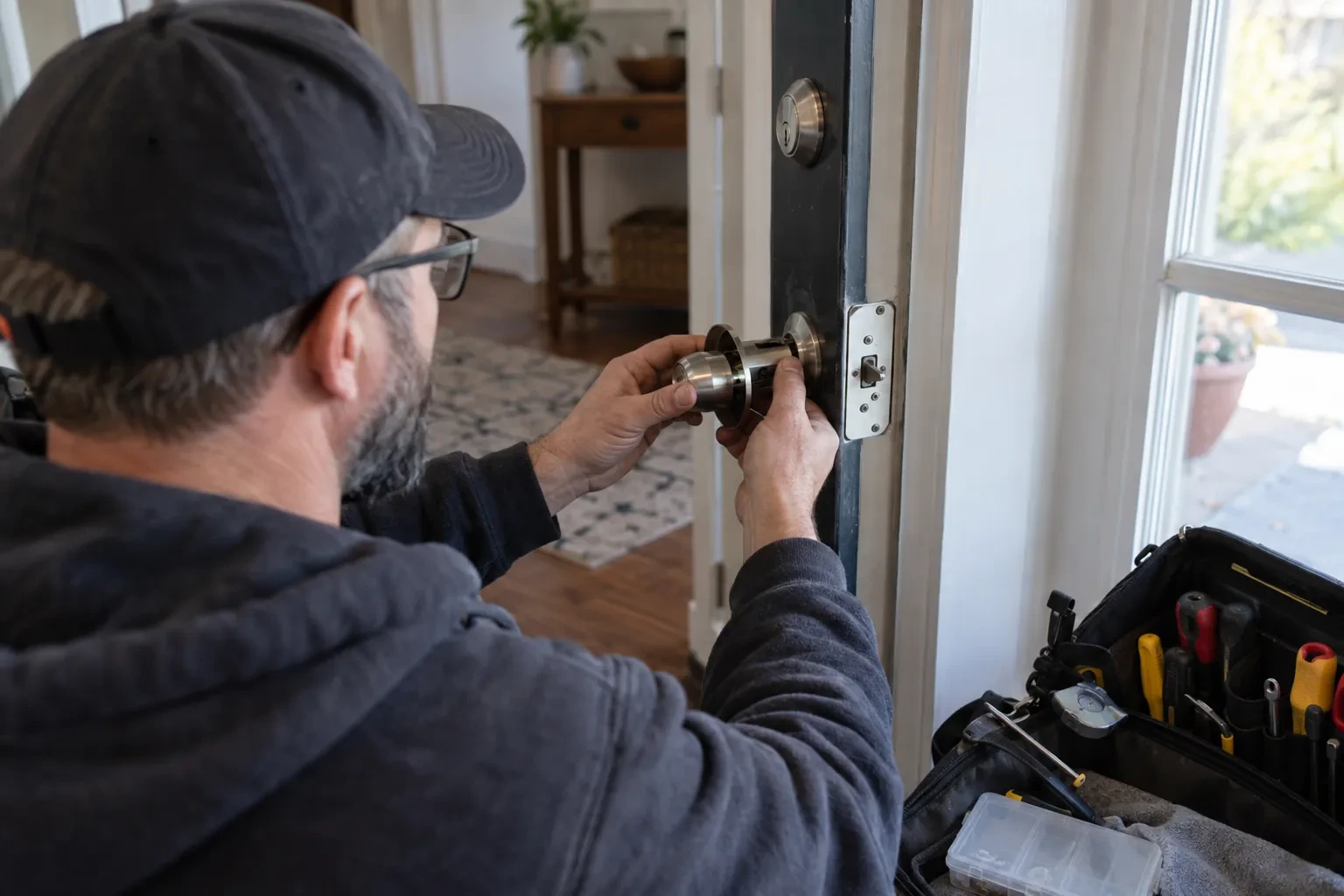
Where the existing lock body is sound, the locksmith removes the ordinary cylinder and fits a high-security one of the same format, so your deadbolt or lever stays and only the working heart changes. The new cylinder brings a sidebar released by finger or rotating pins, hardened steel inserts in the path of a drill, and a keyway that accepts only the controlled blank. Keys are cut from code on a machine that handles the side bitting. The tailpiece or cam is matched so the bolt throws fully, then the cylinder is fixed with its set screw and tested with every key.
Fewer keys, clearer purpose
Many customers finish the visit carrying fewer keys than they started with. Exterior doors keyed alike mean one key for the house; a small master system means a manager carries one key for the whole premises. Each key has a known job. The locksmith explains which key opens which door and leaves that in writing, so the tenth person to ask does not get a shrug. Should you add a door later, a gate, a garage entry or a new office, it can join the same system so you keep the single-key convenience without opening a fresh keyway.