Sound familiar?Cambridge
- The call
- Head office wants a record of who opens the branch and when, tied to an actual name rather than a shared code scrawled on a sticky note taped under the till.
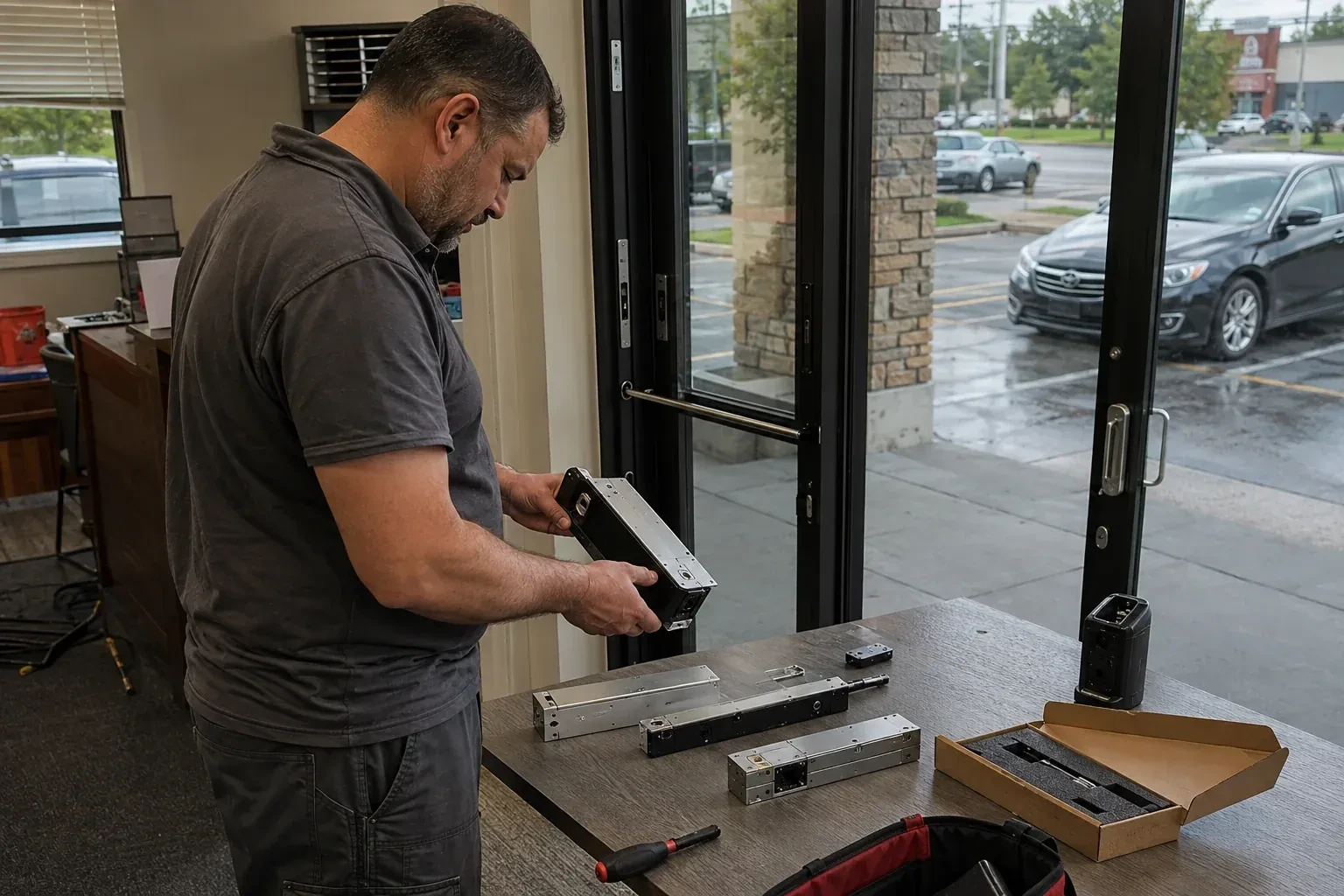
You just leased the empty unit next door and want the new tenant to open their own suite without a key to yours, to the loading dock, or to the electrical room down the hall.
A single door can run on a standalone keypad or card reader that stores its own list of who may enter, though it can still need a power or network connection to work. A building with several controlled openings usually makes more sense on a networked setup instead, where distributed controllers share schedules and credentials and management software brings their logs together into one view. The locksmith sizes the choice to how many doors need controlling and how much the business wants to manage centrally, rather than defaulting to a single approach for every job.
Sound familiar?Cambridge
Access Control Installation · Cambridge
Scene 1
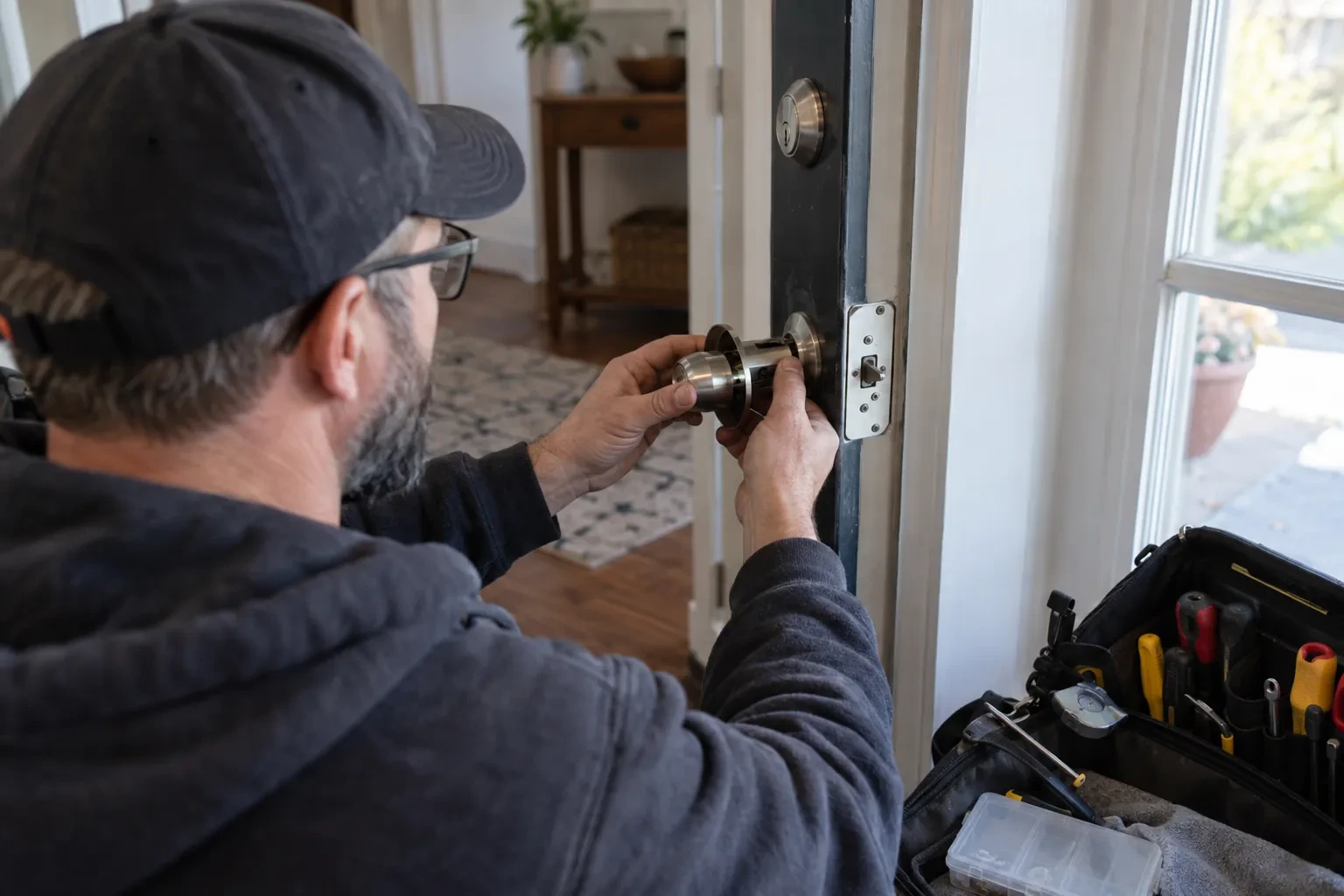
Every opening gets a physical look before it gets any wiring. The locksmith checks what the door and frame are made of, which way the door swings, whether an electric strike will seat cleanly in the existing frame, and whether the door sits on a fire separation, which changes what can be added to it. A hollow metal frame, a wood door, and an aluminum storefront door each take different hardware, and a door that already sits loosely in its frame is noted before an electric strike or a magnetic lock is chosen for it, since alignment decides how reliably the lock releases.
Scene 2
Where the selected hardware supports one, the locksmith fits a conventional cylinder alongside the electronic reader, cut to work with the rest of the building's keys rather than sitting apart as an odd one out; some access-controlled hardware is built without a key cylinder at all. On a door getting the override, the locksmith confirms it operates the latch or bolt cleanly with the electronic hardware in place, and notes who on staff will hold that key. On that door, a dead battery, a controller fault, or a power outage becomes an inconvenience rather than a locked business, since it still opens the ordinary way while the issue is sorted out.
Scene 3
A system sized with room to grow makes adding another opening later a straightforward extension rather than a second project: a new reader and lock on an added door, wired back to the existing controller where there is capacity, or a new standalone unit where the door sits far from the rest. Because schedules, access levels and credentials already exist for the rest of the building, the new door usually needs only to be slotted into that structure rather than have all of it worked out again from the beginning.
What shapes the quotePreston Locksmith Co.
FeesSame any hour
A keypad code needs no card to lose, but a code shared among several people is effectively no longer individual, and a forgotten code left active is a common weak point. A card or fob tied to one named person avoids that particular issue, since it is switched off individually rather than reset for everyone at once. Many businesses use a code for general areas and a card wherever entry needs to be traceable to one person.
A standalone reader at a single door keeps working during a network or Wi-Fi outage, since it checks its own stored list rather than relying on a live connection. A networked controller generally keeps making local decisions at each door as well, though live updates, remote changes and off-site log access may pause until the connection returns.
It helps to know which doors should be controlled, roughly how many people will need a credential, whether any of those doors are also fire exits, and who in the business will administer the system afterward. A floor plan or a walk-through on site fills in anything easier to show than describe, and neither is required in advance.
WaterlooOntario
Every square is one home in a hundred.
On-site assessment
You just leased the empty unit next door and want the new tenant to open their own suite without a key to yours, to the loading dock, or to the electrical room down the hall.
(226) 807-5217, open 24/7.
On-site assessment preferred · (226) 807-5217, open 24/7