Sound familiar?Cambridge
- The call
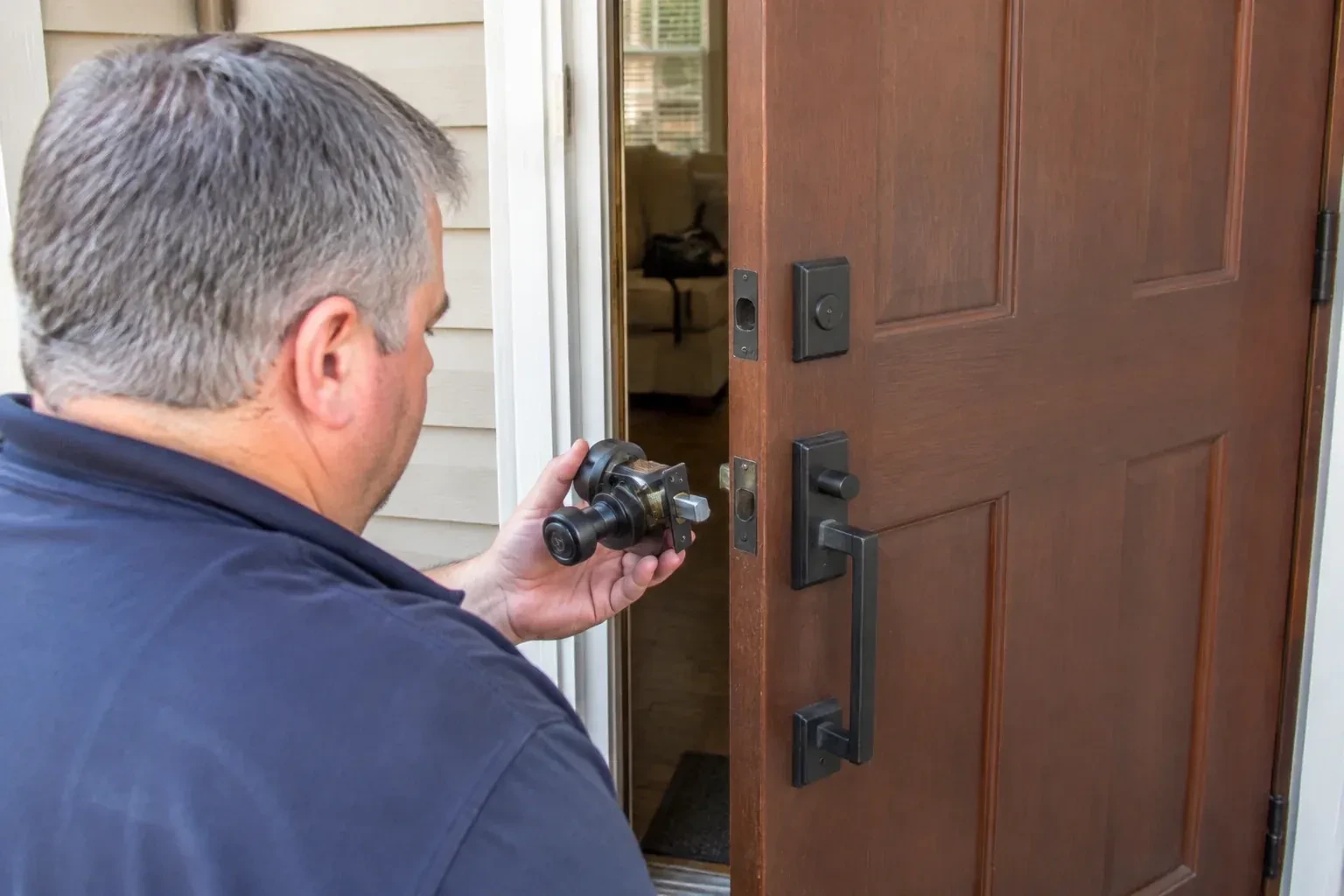
- Overnight the deadbolt froze, and this morning the key would only turn partway. One more push and it sheared off flush with the face of the cylinder. There is nothing left to grip, and the cold is not helping.
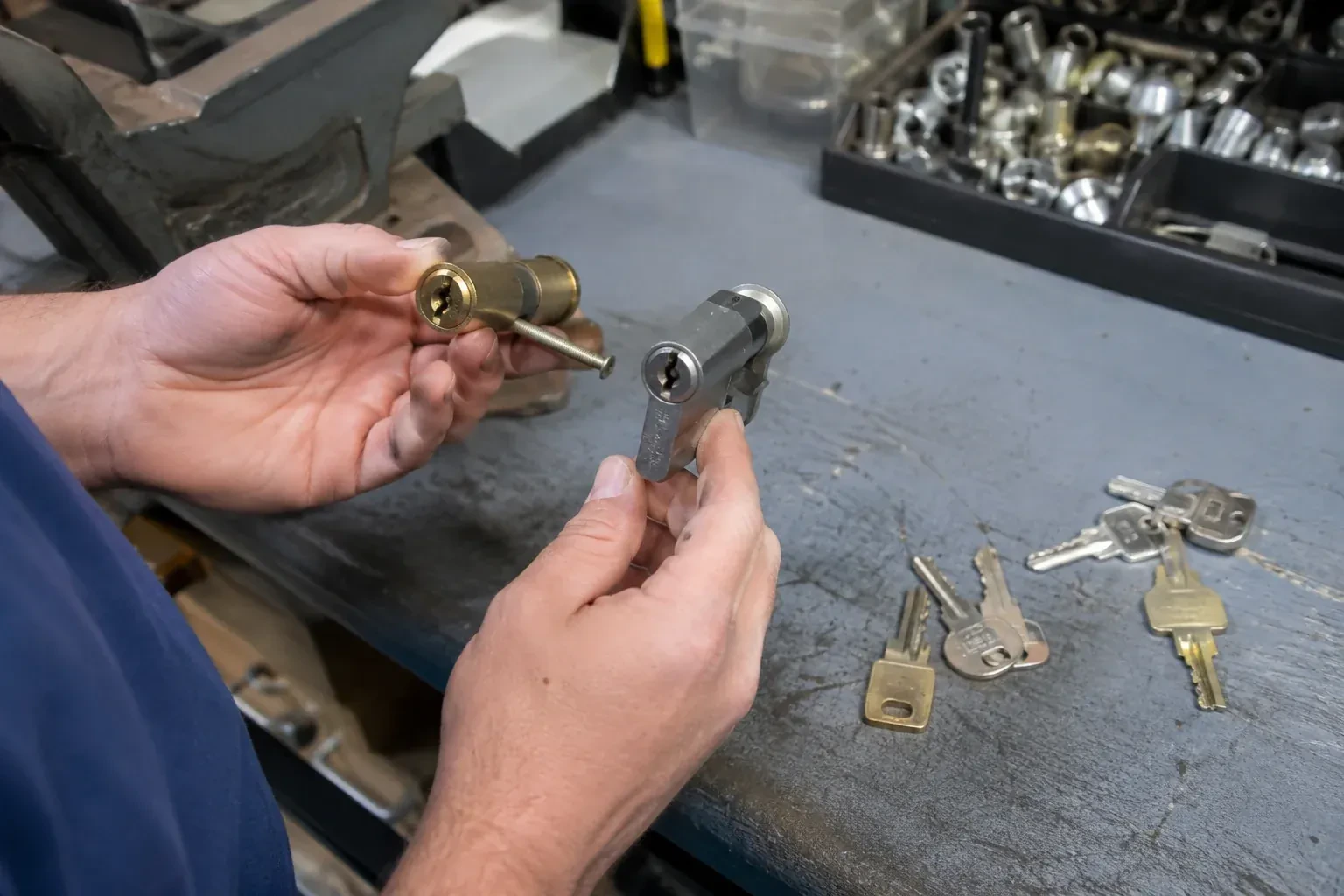
The key went in like any other morning, you turned it, and something gave with a small metallic click. The bow is still between your fingers.
Two facts shape the job before the locksmith arrives: whether the door is locked or unlocked, and whether any of the key is showing. A fragment that protrudes can often be gripped and drawn straight out. One flush or deep needs extractors worked in alongside it. If the plug turned before the key broke, it has to be eased back to its resting position first so the pins line up and release the blade. A locked door means the extraction is followed by opening the lock; an unlocked one means securing it is the priority. Either way the door ends up locking with a key that fits.
Sound familiar?Cambridge
Broken Key Extraction · Cambridge
Scene 1
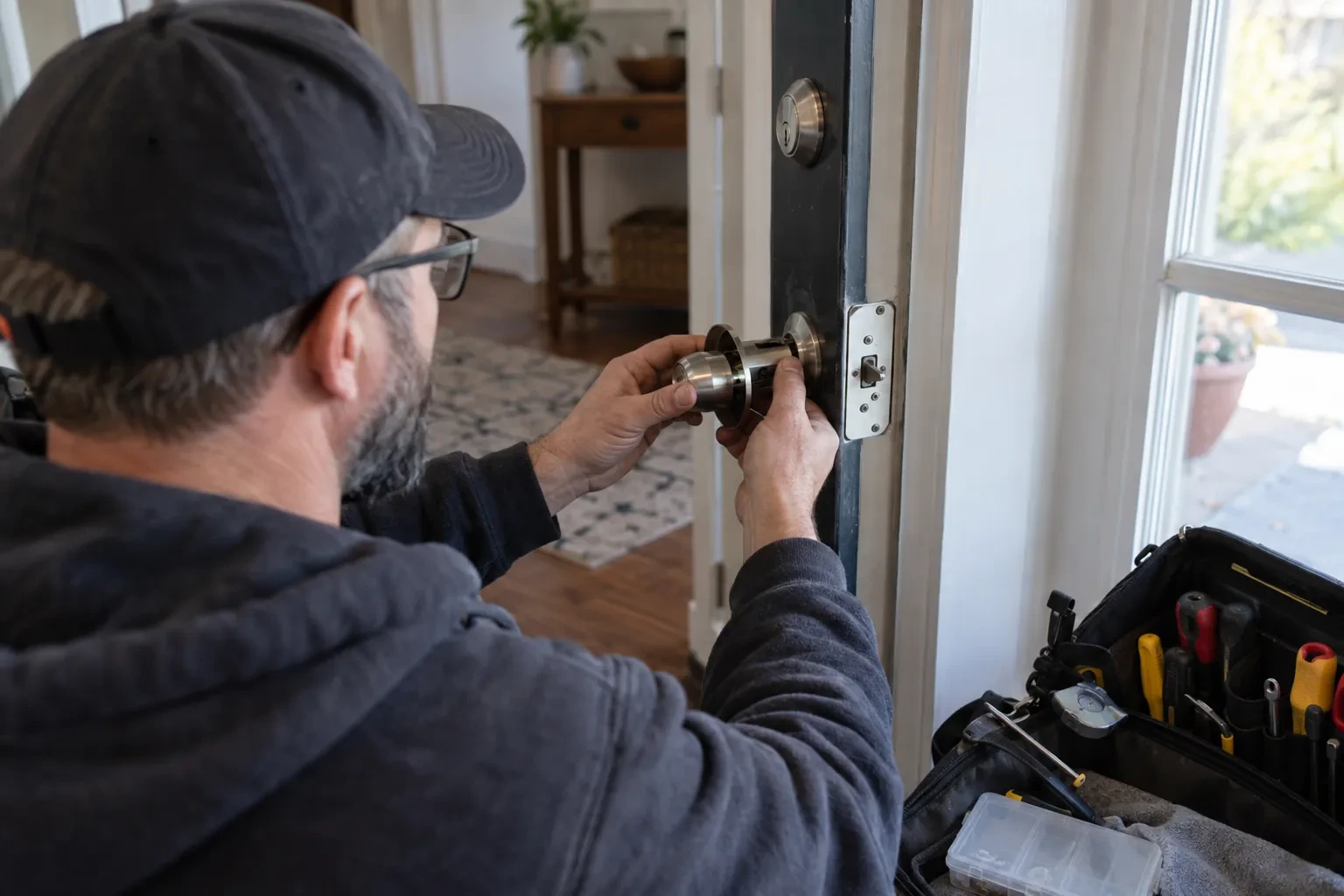
Even a lock in good order can break a key that was already worn, bent or fatigued, so the cylinder is examined for a contributing cause all the same. The locksmith looks for grit and salt crust in the keyway, a cylinder cap that has loosened and let the plug shift, pins that have worn flat so the key needs force to lift them, springs that have weakened, and burrs at the mouth of the keyway that drag on the blade. On an exterior door the strike and hinges are checked as well, since a bolt that binds in its pocket makes the key carry the load. Each finding shapes the advice given once the fragment is out.
Scene 2
Every keyway has grooves, called wards, that run along its length above and below the blade. A hook extractor is a slim strip of spring steel thin enough to ride in one of those grooves beside the fragment. The locksmith slides it in past the broken piece, rotates it slightly so the barbed tip catches a cut in the blade, and draws it back out in a straight line. The pins are lifted clear as the piece passes them, exactly as they are when a key is withdrawn. It is a patient, felt process, and the cylinder is untouched by it.
Scene 3
If the lock belongs to a rental unit, a condo or a workplace, you get a plain account of what was done: the fragment removed, the cylinder inspected and serviced, any key cut, and whether a rekey or replacement was recommended. Tenants and landlords in this province each carry obligations when locks are changed and keys are shared, so if the cylinder was replaced or rekeyed, the note records who now holds which key. For a property manager it closes the ticket cleanly; for you it means the next conversation about that door starts from facts rather than memory.
What shapes the quotePreston Locksmith Co.
FeesSame any hour
Only if the inspection finds a reason. A clean cylinder with sound pins goes straight back to work with a new key. Rekeying makes sense when the pins are worn and sticking, or when a lost or unaccounted key shares the same cut. Replacement is for a cylinder that is corroded, cracked or of a grade that will keep eating keys. Each is offered as its own decision, not bundled in.
It is rare, and it is discussed before anything changes. A glued, jammed or corroded-in fragment can usually still be reached by taking the cylinder off the door and working the plug out from the back. If even that fails, the cylinder is drilled where plug meets housing, sacrificed and replaced on the spot with new keys cut, so the door locks normally by the time the locksmith leaves.
Sometimes, and the visit answers it. A key that failed from its own fatigue in a clean, smooth cylinder says nothing against the lock. A key that broke because the pins were worn flat, the cap had loosened or the keyway was full of grit says the cylinder needs a service or a rekey. One that broke in a corroded, pitted plug is telling you the lock is due for replacement.
WaterlooOntario
Every square is one home in a hundred.
On-site assessment
The key went in like any other morning, you turned it, and something gave with a small metallic click.
(226) 807-5217, open 24/7.
On-site assessment preferred · (226) 807-5217, open 24/7