Sound familiar?Cambridge
- The call
- The accountant's office keeps a decade of client files in cardboard boxes because the only safe in the building is a small drawer safe meant for a laptop, nowhere near large enough for binders of paper.
A dinner service ends with a stack of bills and a handful of credit slips, and right now they sit in an unlocked cash box on a shelf until morning, because nobody has gotten around to anything sturdier.
Businesses call for this service for two different reasons that sometimes overlap: protecting cash held overnight, and protecting paper records that would be enormously slow to recreate. The two priorities point toward different construction, since a cash-rated body resists tools while a document-rated interior resists heat and holds its temperature down through a timed fire test. Servicing an existing unit follows the same split: bolt-work and lock mechanics get physical attention, while any fire-rated lining is checked for the trapped moisture that builds up behind an airtight seal.
Sound familiar?Cambridge
Safe Installation & Servicing · Cambridge
Scene 1
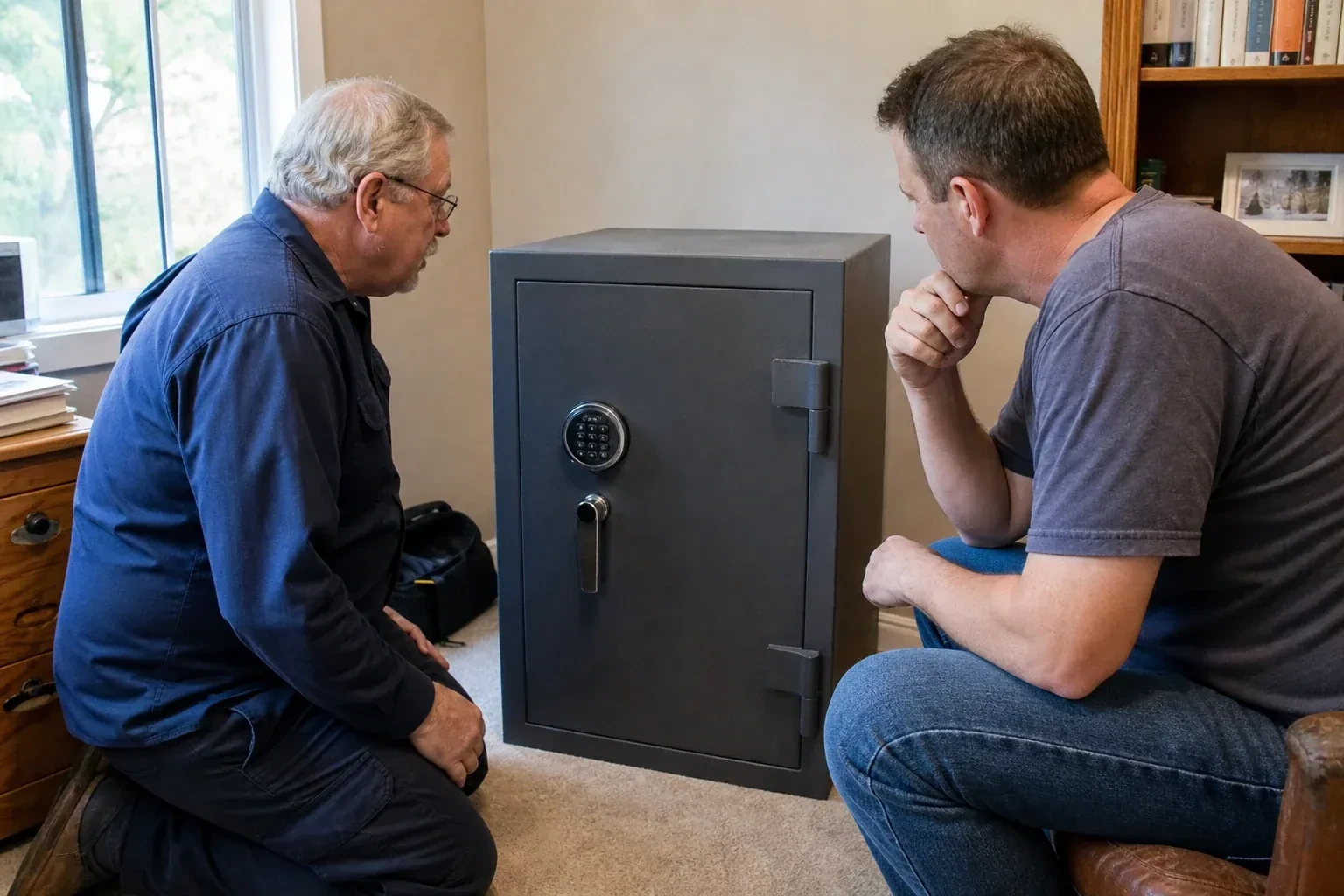
Before any hardware is chosen, the locksmith asks what will actually sit inside: cash from a till, jewelry, firearms, paper contracts, backup drives, or some mix of all of it. Each of those has a different enemy. Cash and jewelry are mainly at risk from tools and time, so a burglary rating matters most. Paper is mainly at risk from heat, so a fire rating matters most, and digital media needs a much lower internal temperature than paper to survive the same fire. Answering this question first is what keeps the rest of the visit from guessing.
Scene 2
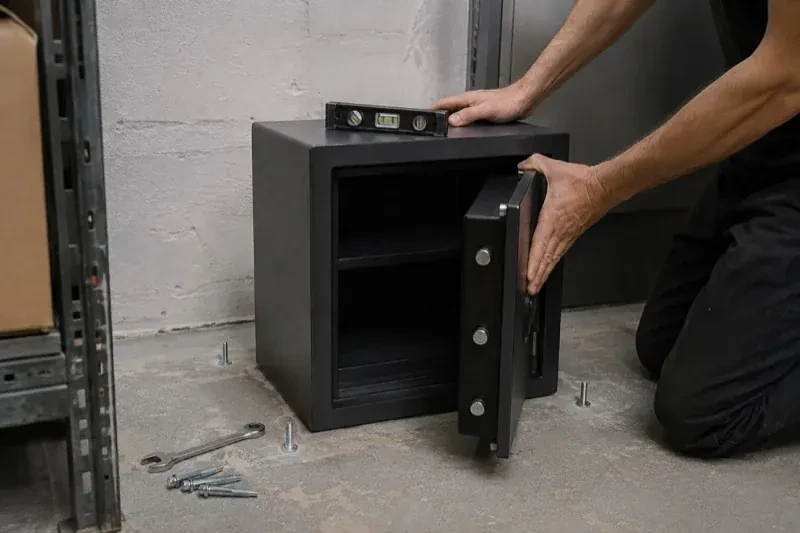
Relocating a bolted-down safe starts with removing the existing anchors cleanly, since a broken bolt left in the floor becomes someone else's problem later. The safe is walked or wheeled out on equipment built for its weight, with the route measured in advance so it clears every doorway and turn. At the new address the same assessment happens as for a brand-new installation: the floor or wall is identified, the safe is leveled, and it is anchored again from scratch rather than assumed to sit safely just because it once did elsewhere.
Scene 3
A fire-rated safe protects its contents partly by sealing tightly, and that same seal traps ordinary household humidity over months and years. Opening the door for a few hours every few weeks lets that trapped air exchange with the room, and a desiccant packet placed inside absorbs what builds up between those openings, provided it gets refreshed on a regular schedule rather than forgotten. A musty smell or a document that feels soft at the edges is the interior asking for that airing out sooner rather than later.
What shapes the quotePreston Locksmith Co.
FeesSame any hour
Start with what will be inside it. Cash, jewelry, and firearms mainly need protection from tools and time, so the burglary rating matters most. Paper records and digital backups mainly need protection from heat, so the fire rating matters most, and digital media needs a noticeably lower internal temperature than paper to survive. Many households and businesses end up choosing a unit built to both standards rather than picking just one.
Delivery and the final move into position are part of the service, using equipment suited to the safe's actual weight rather than improvising with furniture dollies or straps meant for lighter loads. The route in is measured ahead of time so doorways, stairs, and tight turns are accounted for before the unit arrives, which avoids a surprise at the one hallway that turns out to be too narrow.
Often, yes, though the floor construction and the safe's weight both need a look first. A lighter document safe rarely raises a concern on an upper level, while a large, heavily built unit may need the floor's load capacity checked before it goes up, particularly in an older building. The route to get it there, including stairs, elevators, and doorway widths, gets measured at the same time.
WaterlooOntario
Every square is one home in a hundred.
On-site assessment
A dinner service ends with a stack of bills and a handful of credit slips, and right now they sit in an unlocked cash box on a shelf until morning, because nobody has gotten around to anything…
(226) 807-5217, open 24/7.
On-site assessment preferred · (226) 807-5217, open 24/7