Skip to content
PrestonLocksmith Co.Open 24/7 (226) 807-5217
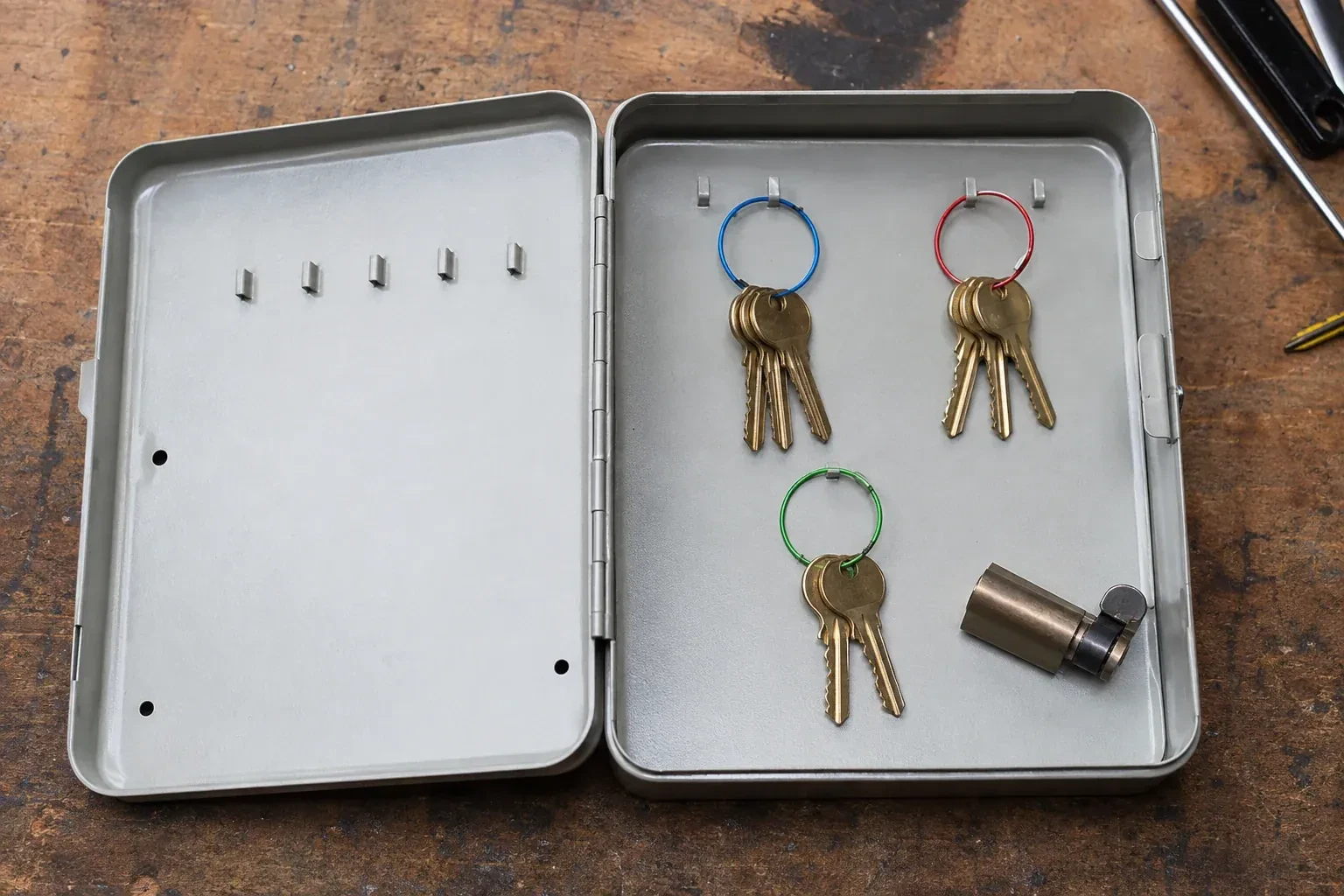
Three groups of keys on colored rings in an open metal key cabinet. — Master Key System Design, Cambridge

Commercial · Cambridge

Master Key System Design

A self-storage operator wants the office, the tenant gate and the equipment shed on three different levels of access for staff, but every lock on the property currently answers to the same handful of interchangeable keys handed out over the years.

In plain words

A master key hierarchy usually has three layers. At the bottom, an individual change key opens one door or a small keyed-alike group for the person who needs it. In the middle, a sub-master opens a defined group, such as every door on a floor or in a department. At the top, a single master opens the whole set and is kept to a short list of people. Master key system design is the process of deciding where those layers sit for a particular business, choosing hardware that can support them, and cutting and testing the keys so each layer works exactly as planned, no more and no less.

Sound familiar?Cambridge

The call
A new hire at the shop gets handed whatever spare key happens to be in the drawer, and it turns out to open the stockroom, the back office and the safe room all at once. The owner realizes nobody actually decided who should open what.

NextHow the visit goes

Master Key System Design · Cambridge

How the visit goes

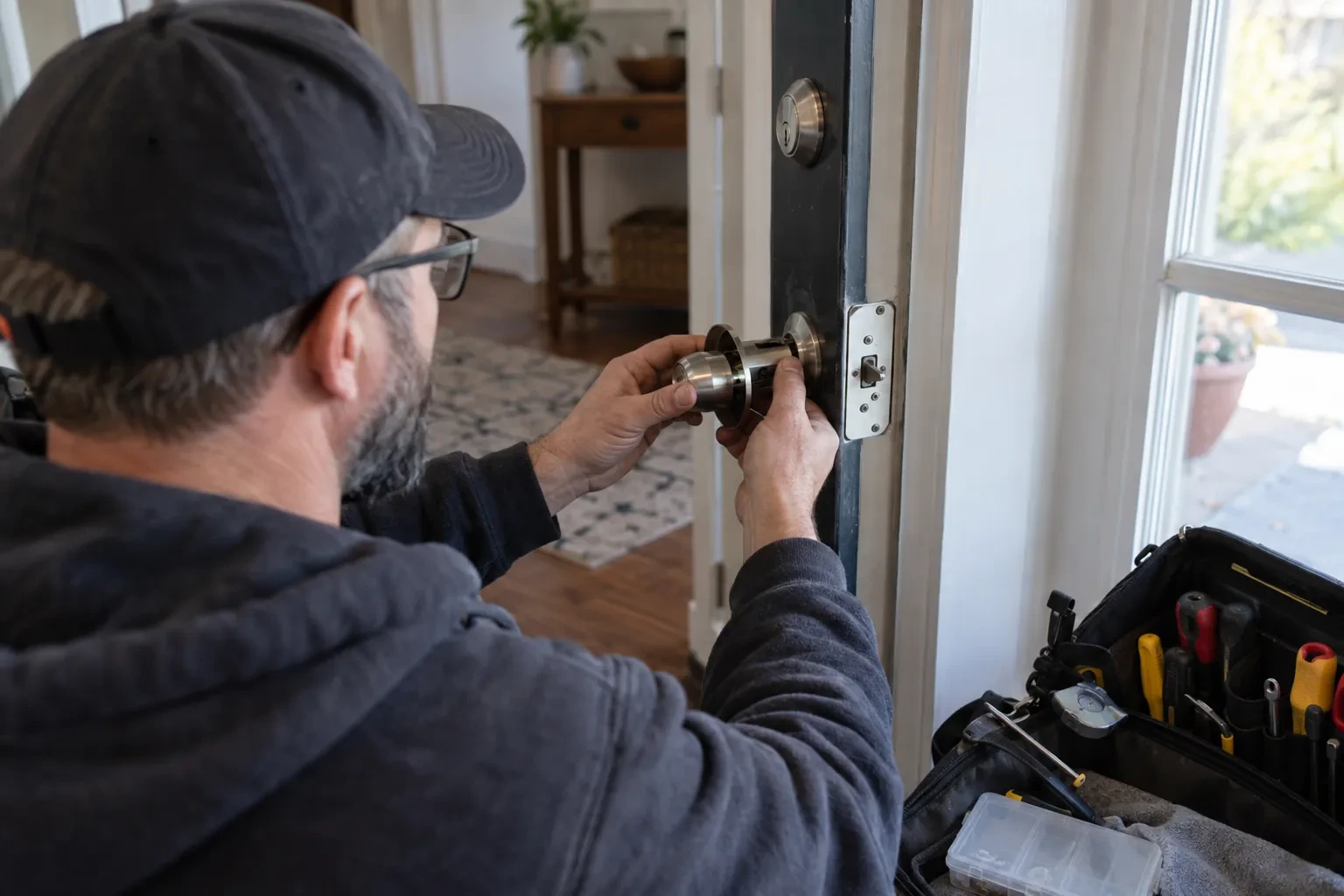
Technician fitting a steel door knob into a door beside a deadbolt, with an open tool bag of screwdrivers nearby.
  1. Scene 1

    What the current keys can already tell you

    Before anything is redesigned, the locksmith reviews the keys already in circulation: how many exist for each door, which ones are stamped or coded in a way that identifies what they open, and which staff members currently hold more access than their role calls for. This review often surfaces the exact problem the new system needs to fix, whether that is a master key copied one time too many or a department that was folded into another without anyone updating who could get in.

  2. Scene 2

    Fitting or replacing hardware to match the plan

    Cylinders that can join the new hierarchy without modification are pinned in place; those that cannot, whether because of age, a mismatched keyway or simple wear, are replaced with compatible hardware chosen to match the finish and function already on the door. Locksets on a barrier-free path of travel are fitted with lever or paddle-style hardware that can be operated with a closed fist, keeping those doors usable for everyone while still carrying their assigned level in the same hierarchy as the rest of the building.

  3. Scene 3

    A building that finally matches its own org chart

    The most visible change is often the simplest one: the level of key someone carries now matches the role they actually hold, instead of matching whatever happened to be handed down or copied over the years. Walking the building afterward, each door answers to keys that were deliberately assigned to it, and the chart in the office explains every one of those decisions to anyone who asks about it.

In the van

  • Cylinder decoders
  • Change and master keys
  • Master pin kits
  • Key marking tools
  • Locking chart storage cabinet

What shapes the quotePreston Locksmith Co.

Documentation and chart detail requested
A simple chart listing levels and holders is the baseline. Some businesses want a more detailed record, cross-referenced by department, room number or staff role, which takes additional time to prepare and is quoted as part of the documentation work.
Working around an occupied, operating property
Rekeying doors in a planned sequence so a business keeps operating throughout, rather than all at once, takes coordination with the owner's schedule. Properties that need this staged approach, with interim arrangements for doors mid-conversion, add planning time beyond a straightforward, all-at-once installation.
Number of doors and levels involved
A single office with one change key and no sub-master is a simpler project than a multi-floor property with several departments and a top-level master. The quote reflects how many doors are assessed, how many levels are designed, and how many cylinders are pinned to match those levels.
FeesSame any hour

Have it ready

Before you call · 0 / 3

(226) 807-5217

Good questions about locks

What is the difference between a master key and a sub-master?

A sub-master sits below the top level and opens a defined group, such as one department or one floor, without opening doors outside that group. The top-level master sits above every sub-master and opens everything in the system. Most properties need only one or two sub-master levels; adding more than the business genuinely uses just makes the chart harder to manage without adding real convenience.

What should I have ready before the assessment visit?

A rough list of who currently has access to which doors, any existing keys or cylinders you can point to, and a sense of upcoming changes such as new hires, a department split, or a unit due to open. None of this needs to be exact; the assessment is partly built around confirming or correcting whatever the business already assumes about its own access.

Can my existing locks be used, or do I need all new hardware?

Many existing cylinders can join a new hierarchy as they are, once their keyway and condition are confirmed compatible. Others, particularly older or mismatched hardware, are replaced so the whole system pins cleanly without cross-keying. The assessment identifies which doors fall into each group before any work begins, so the plan reflects what is actually on the property rather than assuming everything needs to change.

Cambridgeinformation

WaterlooOntario

Master Key System Design · Hespeler, Preston, Blair

Town
Cambridge, Waterloo
In business
26 years
Hours
Open 24/7
Nights, weekends and holidays, same fees
Visits
On-site assessment preferred. Request a visit or call.

2021 census: what it means at the door

Every square is one home in a hundred.

  • 48 in 100 homes · mixed ages
  • About 48% of homes in Cambridge were built in 1980 or earlier, according to the 2021 Census.Mixed housing stock keeps a locksmith versatile. A morning might be a heritage mortise lock rebuilt and an afternoon a smart lock paired to a phone on a steel door. The same care goes into both, with tools and parts for each.
  • Single-detached houses make up about 57% of homes in Cambridge (2021 Census).Mixed housing brings mixed hardware ages as well as types. A locksmith may rebuild a mortise lock on a semi-detached house and then set up a keypad on a townhouse door across the road, and treats each with the care its owner expects.

Source: Statistics Canada, Census Profile

Open Cambridge in Google Maps

On-site assessment

Request a visit.

A self-storage operator wants the office, the tenant gate and the equipment shed on three different levels of access for staff, but every lock on the property currently answers to the same handful of…

(226) 807-5217, open 24/7.