Sound familiar?Cambridge
- The call
- You jiggle the key a little and the old deadbolt opens even when the cut does not look quite right. If your worn key can do that, you wonder what a stranger with the right tools could do.
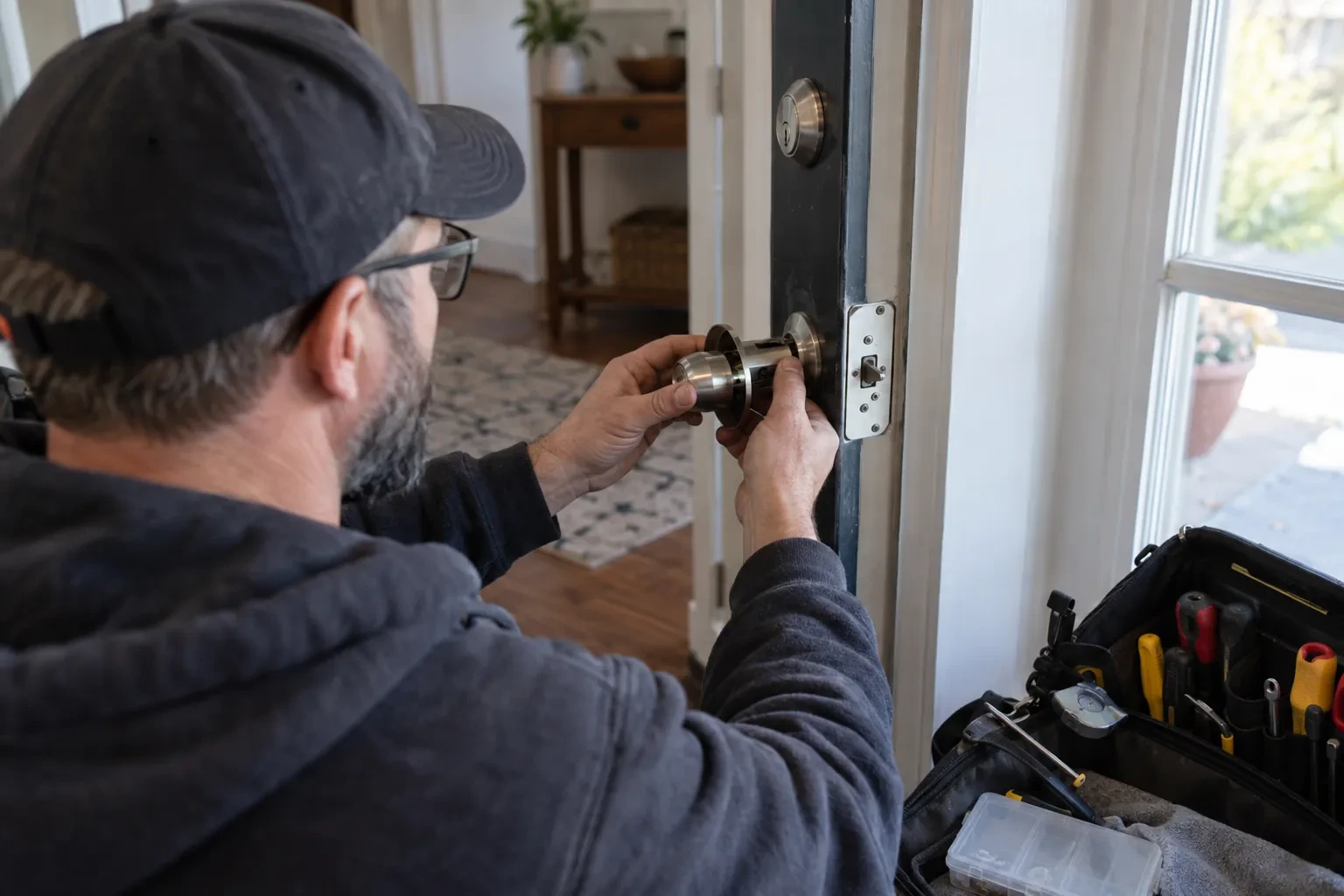
You run a home office with client files and equipment, and your insurer has asked what kind of lock is on the door. The honest answer is the builder's knob lock and a light deadbolt from when the house was new.
The service begins with a conversation about what the door protects and what worries you, then a close look at the door as a whole: the cylinder, the bolt, the strike, the frame, the hinges and any glass nearby. From that the locksmith recommends a level of protection that matches the risk, fits it, and sets up the key system in your name. From then on, extra keys are cut only when you authorise them, and you receive a record of which key opens which door. It is the mechanical answer to the question most people eventually ask: who else has a key to this?
Sound familiar?Cambridge
High Security Locks · Cambridge
Scene 1
The door itself is inspected as part of the lock. Hollow-core doors, thin panels beside the lock, and hinge screws that barely bite into the frame all undo the value of a strong cylinder. The locksmith checks how the door hangs, whether it drags or needs a shoulder to close, and whether the hinges are on the secure side. Glass close to the lock is noted, because a hand through a broken sidelight can reach an inside thumb-turn. None of this rules out an upgrade; it shows which supporting pieces belong in the plan so the whole opening is brought up together.
Scene 2
The finish is a methodical test. Every key is cycled in every lock from both sides, with the door open and then closed and latched. The bolt is watched entering the strike pocket to confirm it throws fully and does not drag. The door is pushed and pulled while locked to feel for play at the strike or hinges. Cylinders receive a dry lubricant approved for their mechanism. Then the locksmith walks you through the operation, the key control documents and the record of hardware fitted, so you know both how to use the door and how to order the next key.
Scene 3
Many customers finish the visit carrying fewer keys than they started with. Exterior doors keyed alike mean one key for the house; a small master system means a manager carries one key for the whole premises. Each key has a known job. The locksmith explains which key opens which door and leaves that in writing, so the tenth person to ask does not get a shrug. Should you add a door later, a gate, a garage entry or a new office, it can join the same system so you keep the single-key convenience without opening a fresh keyway.
What shapes the quotePreston Locksmith Co.
FeesSame any hour
Only light care. Use the dry lubricant the locksmith recommends once or twice a year, never oil, which gathers grit around the finger pins and sidebar. Keep the keyway free of debris and insert the key fully before turning. In winter, warm a resisting key in your hand or use a de-icer rather than forcing it. Check hinge and strike screws each season so the door stays aligned. Treated this way the cylinder lasts for decades.
It means your key can only be copied through the locksmith who manages your system, after checking that the person asking is on your list of authorised names. Blanks for the keyway are not sold to hardware stores or kiosks while the patent lasts. Each key is numbered and recorded, so you know how many exist. For a home that ends the worry about old copies; for a business it turns a lost staff key into a known, manageable event.
The locksmith confirms that the person ordering the work is entitled to change the locks: the owner, a tenant with the landlord's agreement, or a property or facilities manager for a business. Photo identification and something linking you to the address usually settle it, and for a company a letter or a call to the named contact does the same. It protects you as much as anyone, since the same check stops someone else from changing your locks.
WaterlooOntario
Every square is one home in a hundred.
On-site assessment
You run a home office with client files and equipment, and your insurer has asked what kind of lock is on the door.
(226) 807-5217, open 24/7.
On-site assessment preferred · (226) 807-5217, open 24/7