Skip to content
PrestonLocksmith Co.Open 24/7 (226) 807-5217
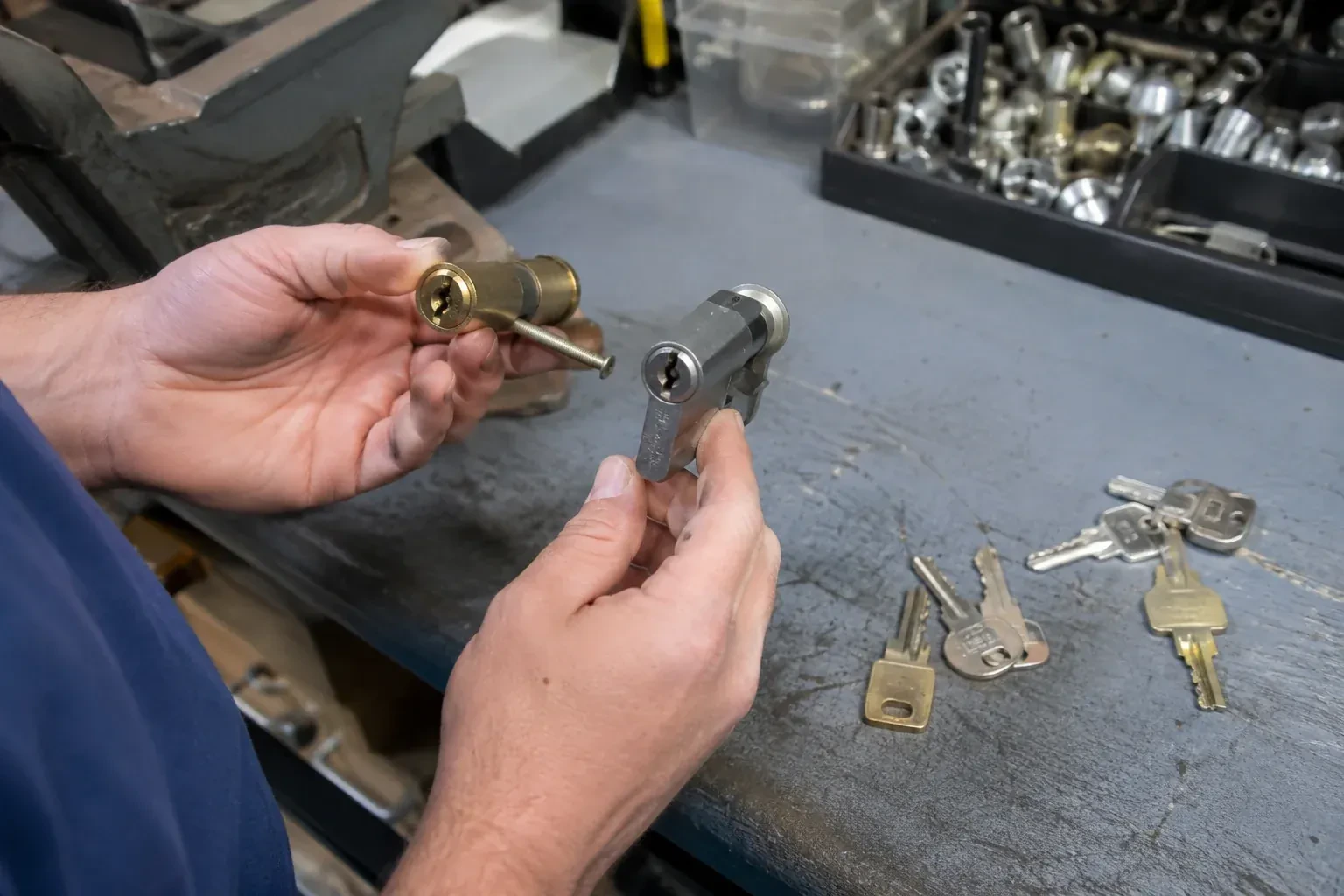
Hands comparing detached lock cylinders beside loose keys on a workbench. — Broken Key Extraction, Hespeler

Lockouts · Hespeler

Broken Key Extraction

The key went in like any other morning, you turned it, and something gave with a small metallic click. The bow is still between your fingers.

In plain words

The tools are simple and precise. A hook extractor is a thin strip of spring steel with a barb at the tip; it slides along the groove of the keyway above or below the fragment, snags one of the cuts, and walks it out. A spiral extractor works like a tiny screw, threading into the ridges of the cuts and gripping as it turns. Fine-tipped extractor pliers handle a piece that shows above the face. A tension tool brings a turned plug back to rest. None of these push inward, which is the whole point: the piece comes out the way it went in and the cylinder stays whole.

Sound familiar?Hespeler

The call
The apartment key snapped mid-turn, leaving the cylinder twisted halfway between locked and open. The building manager's spare is somewhere across town and nobody else has a copy. You are on the wrong side of the door.
NextHow the visit goes

Broken Key Extraction · Hespeler

How the visit goes

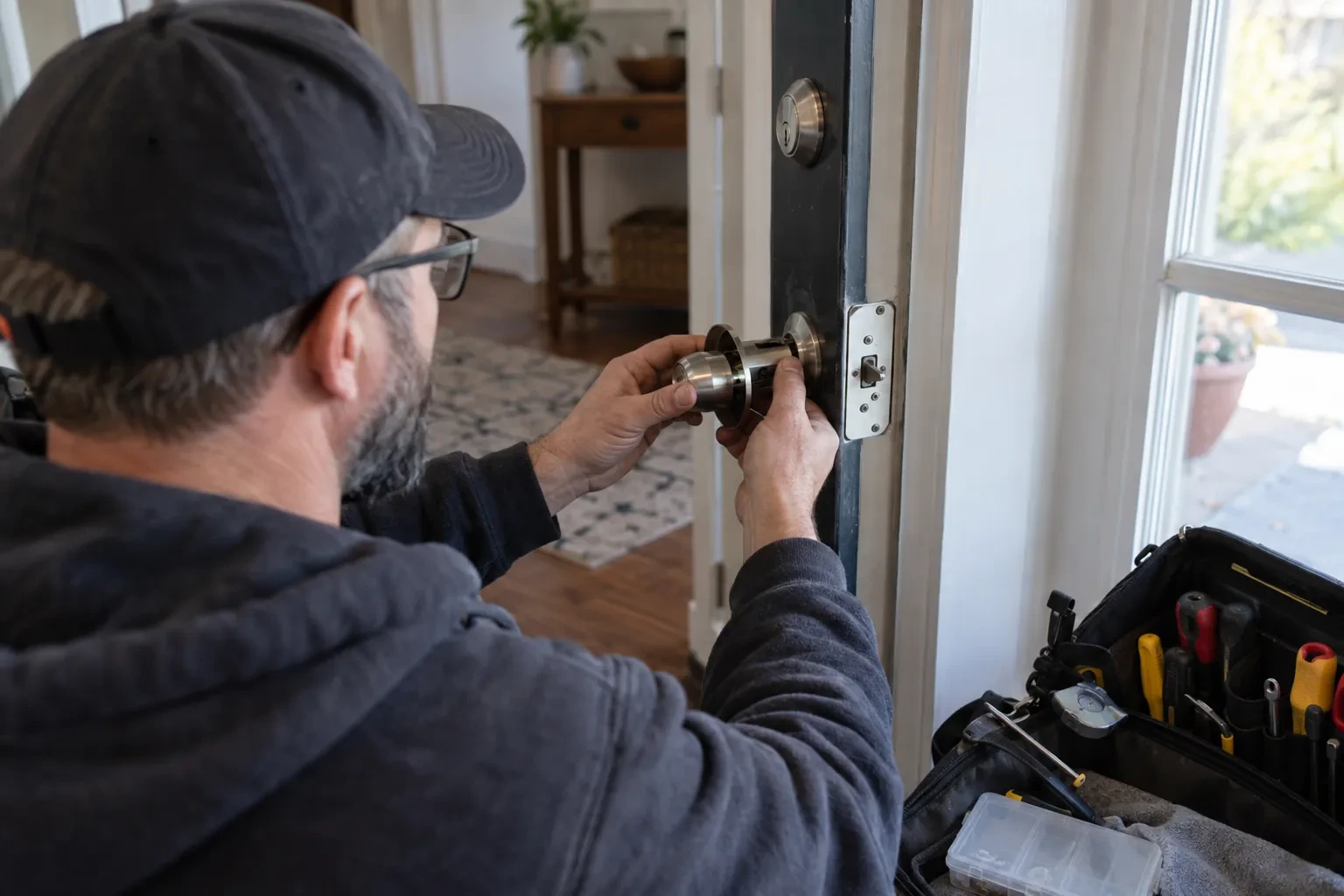
Technician fitting a steel door knob into a door beside a deadbolt, with an open tool bag of screwdrivers nearby. — Hespeler
  1. Scene 1

    Reading the cylinder for the cause

    Even a lock in good order can break a key that was already worn, bent or fatigued, so the cylinder is examined for a contributing cause all the same. The locksmith looks for grit and salt crust in the keyway, a cylinder cap that has loosened and let the plug shift, pins that have worn flat so the key needs force to lift them, springs that have weakened, and burrs at the mouth of the keyway that drag on the blade. On an exterior door the strike and hinges are checked as well, since a bolt that binds in its pocket makes the key carry the load. Each finding shapes the advice given once the fragment is out.

  2. Scene 2

    The last resort, said out loud first

    If a fragment has been glued in place, driven behind the pins with a screwdriver, or seized into a corroded plug, drilling can be the only route left, and you are told so before it starts. The bit is placed precisely where plug meets housing, freeing the plug to rotate; the damage is contained inside the cylinder and the door, trim and bolt are left alone. A fresh cylinder or complete deadbolt is installed during the same visit, keys are cut and tried, and the door is locked behind you before the van pulls away. It happens rarely, and it still ends with a door you can trust.

  3. Scene 3

    A key cut from the pattern, not the wear

    You leave with a key that was cut to the lock's original specification rather than traced from the tired blade that just failed. That difference shows every time you use it: it seats fully, lifts each pin cleanly and turns without a wiggle. Two or three copies made from that fresh cut give you spares that are as good as the first. The old bent or thinning keys that shared the ring are worth retiring now, because a key that has started to bend has started to crack, and the next one to snap will be one of them.

In the van

  • Plug follower and cap tool
  • Compressed air for the keyway
  • Lock de-icer
  • Vehicle key blades and chip shells
  • Fine-jawed extractor pliers

What shapes the quotePreston Locksmith Co.

How the new key is made
Cutting from a key code or a crisp spare, decoding the two halves with a gauge, or cutting a restricted blank from system records each take different time and stock.
How deep the fragment sits
A piece standing above the cylinder face is the simplest case. One flush with the face or deep behind the pins takes longer, finer work with hooks and spirals, and the quote reflects that.
Removing the cylinder to free it
A deep or bound fragment may need the cylinder taken off the door and the plug pushed out from behind on the bench. That disassembly and reassembly is quoted on its own.

FeesSame any hour

Have it ready

Before you call · 0 / 3

(226) 807-5217

Good questions about locks

Should I rekey or replace the lock afterwards?

Only if the inspection finds a reason. A clean cylinder with sound pins goes straight back to work with a new key. Rekeying makes sense when the pins are worn and sticking, or when a lost or unaccounted key shares the same cut. Replacement is for a cylinder that is corroded, cracked or of a grade that will keep eating keys. Each is offered as its own decision, not bundled in.

What happens if the piece cannot be removed?

It is rare, and it is discussed before anything changes. A glued, jammed or corroded-in fragment can usually still be reached by taking the cylinder off the door and working the plug out from the back. If even that fails, the cylinder is drilled where plug meets housing, sacrificed and replaced on the spot with new keys cut, so the door locks normally by the time the locksmith leaves.

Is a broken key a sign the whole lock is worn out?

Sometimes, and the visit answers it. A key that failed from its own fatigue in a clean, smooth cylinder says nothing against the lock. A key that broke because the pins were worn flat, the cap had loosened or the keyway was full of grit says the cylinder needs a service or a rekey. One that broke in a corroded, pitted plug is telling you the lock is due for replacement.

Hespelerinformation

WaterlooOntario

Broken Key Extraction · Cambridge, Preston, Blair

Town
Hespeler, Waterloo
In business
26 years
Hours
Open 24/7
Nights, weekends and holidays, same fees
Visits
On-site assessment preferred. Request a visit or call.

2021 census: what it means at the door

Every square is one home in a hundred.

  • 48 in 100 homes · mixed ages
  • About 48% of homes in Cambridge were built in 1980 or earlier, according to the 2021 Census.Where housing is mixed, doors that have been replaced sit beside doors that never were. A new door in an old frame, or an old door in a repaired frame, needs its strike and hinges checked together so the whole assembly works as one.
  • Single-detached houses make up about 57% of homes in Cambridge (2021 Census).Where houses and attached homes share an area, lockouts are as varied as the doors. A porch, a hallway or a shared vestibule each calls for a slightly different approach, and a locksmith used to all three arrives ready for whichever it is.

Source: Statistics Canada, Census Profile

Open Hespeler in Google Maps

On-site assessment

Request a visit.

The key went in like any other morning, you turned it, and something gave with a small metallic click.

(226) 807-5217, open 24/7.