Sound familiar?Cambridge
- The call
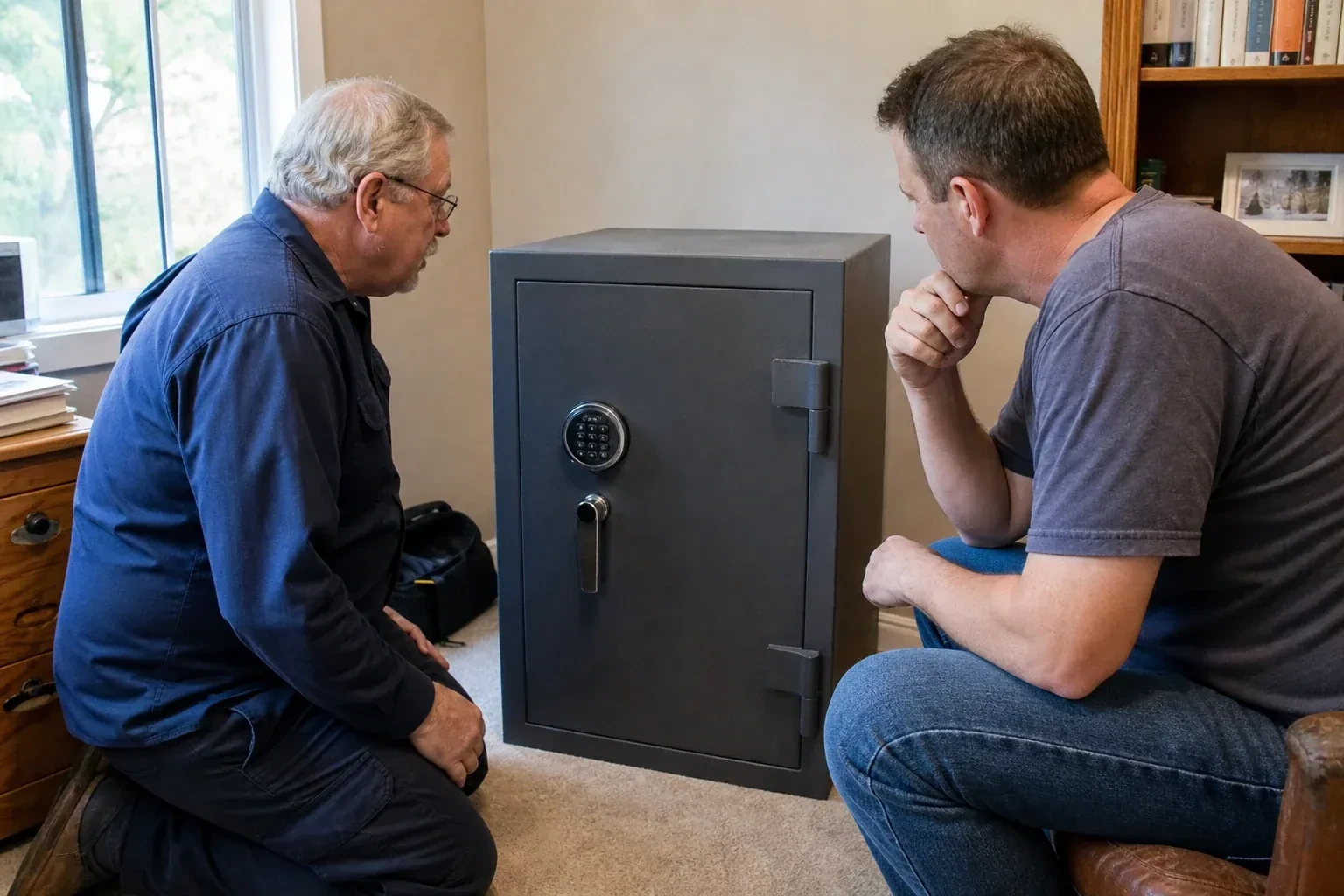
- The keypad on the office safe blinks a low-battery warning every morning now, and whoever notices it first quietly hopes someone else deals with it before the batteries finally give out mid-week.
A dinner service ends with a stack of bills and a handful of credit slips, and right now they sit in an unlocked cash box on a shelf until morning, because nobody has gotten around to anything sturdier.
The lock on a safe is either a mechanical dial built around a wheel pack and gates, set and tested by a trained hand, or an electronic keypad running on batteries, and each has its own service needs. A new mechanical lock is set to a combination chosen by the owner and tested through a full open-and-close cycle before installation is called finished. An electronic lock gets fresh batteries, a reprogrammed code, and a check that the low-battery warning actually sounds before it dies. Either way, nobody but the owner leaves with the working combination or code.
Sound familiar?Cambridge
Safe Installation & Servicing · Cambridge
Scene 1
Many businesses are told by an insurance policy, a franchise agreement, or a head office what rating a safe on the premises needs to meet before cash or stock is fully covered. The locksmith asks whether any such requirement exists before recommending a unit, because installing a lower-rated safe than a policy calls for can leave a real gap between what the business assumes is protected and what actually is. Where no requirement has been given, the conversation turns to how much is realistically kept on site overnight.
Scene 2
The visit begins by separating two decisions that people often blur together. Some burglary ratings come from an independent lab timing how long a trained attempt with real tools takes to force the door, expressed in minutes of net working time; others are construction classifications based on steel thickness and body design rather than a timed attack. A fire rating comes from a timed furnace test that measures how hot the interior gets, expressed as a temperature ceiling held for a set number of hours. A unit is chosen, or confirmed if it is already owned, against both numbers separately rather than a single vague idea of how secure a safe looks.
Scene 3
The internal mechanism that throws and retracts the bolts benefits from the same kind of attention a door lock gets, on a longer cycle. A dry or purpose-made bolt-work lubricant, applied every year or two depending on how often the safe is opened, keeps the mechanism from stiffening with old grease or picking up rust in a damp room. Household oil is generally the wrong choice here, since it tends to attract dust and grit rather than shed it the way a purpose-made lubricant does.
What shapes the quotePreston Locksmith Co.
FeesSame any hour
Start with what will be inside it. Cash, jewelry, and firearms mainly need protection from tools and time, so the burglary rating matters most. Paper records and digital backups mainly need protection from heat, so the fire rating matters most, and digital media needs a noticeably lower internal temperature than paper to survive. Many households and businesses end up choosing a unit built to both standards rather than picking just one.
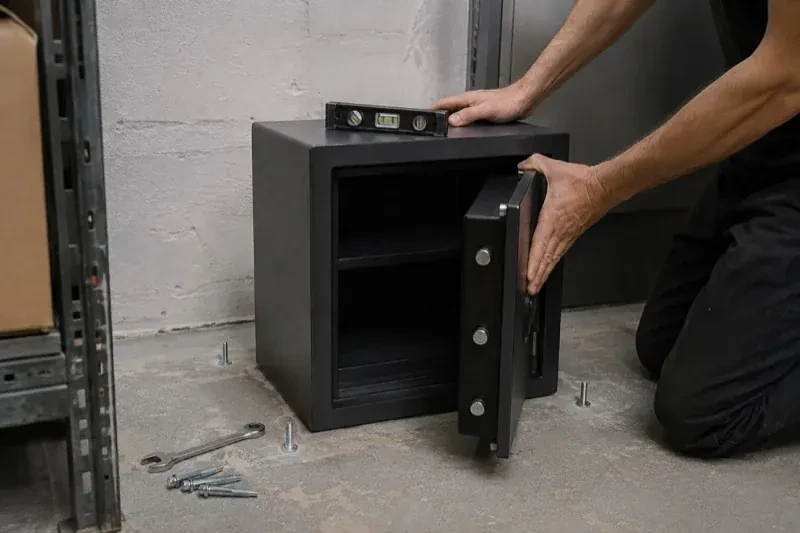
Delivery and the final move into position are part of the service, using equipment suited to the safe's actual weight rather than improvising with furniture dollies or straps meant for lighter loads. The route in is measured ahead of time so doorways, stairs, and tight turns are accounted for before the unit arrives, which avoids a surprise at the one hallway that turns out to be too narrow.
Often, yes, though the floor construction and the safe's weight both need a look first. A lighter document safe rarely raises a concern on an upper level, while a large, heavily built unit may need the floor's load capacity checked before it goes up, particularly in an older building. The route to get it there, including stairs, elevators, and doorway widths, gets measured at the same time.
WaterlooOntario
Every square is one home in a hundred.
On-site assessment
A dinner service ends with a stack of bills and a handful of credit slips, and right now they sit in an unlocked cash box on a shelf until morning, because nobody has gotten around to anything…
(226) 807-5217, open 24/7.
On-site assessment preferred · (226) 807-5217, open 24/7