Skip to content
PrestonLocksmith Co.Open 24/7 (226) 807-5217
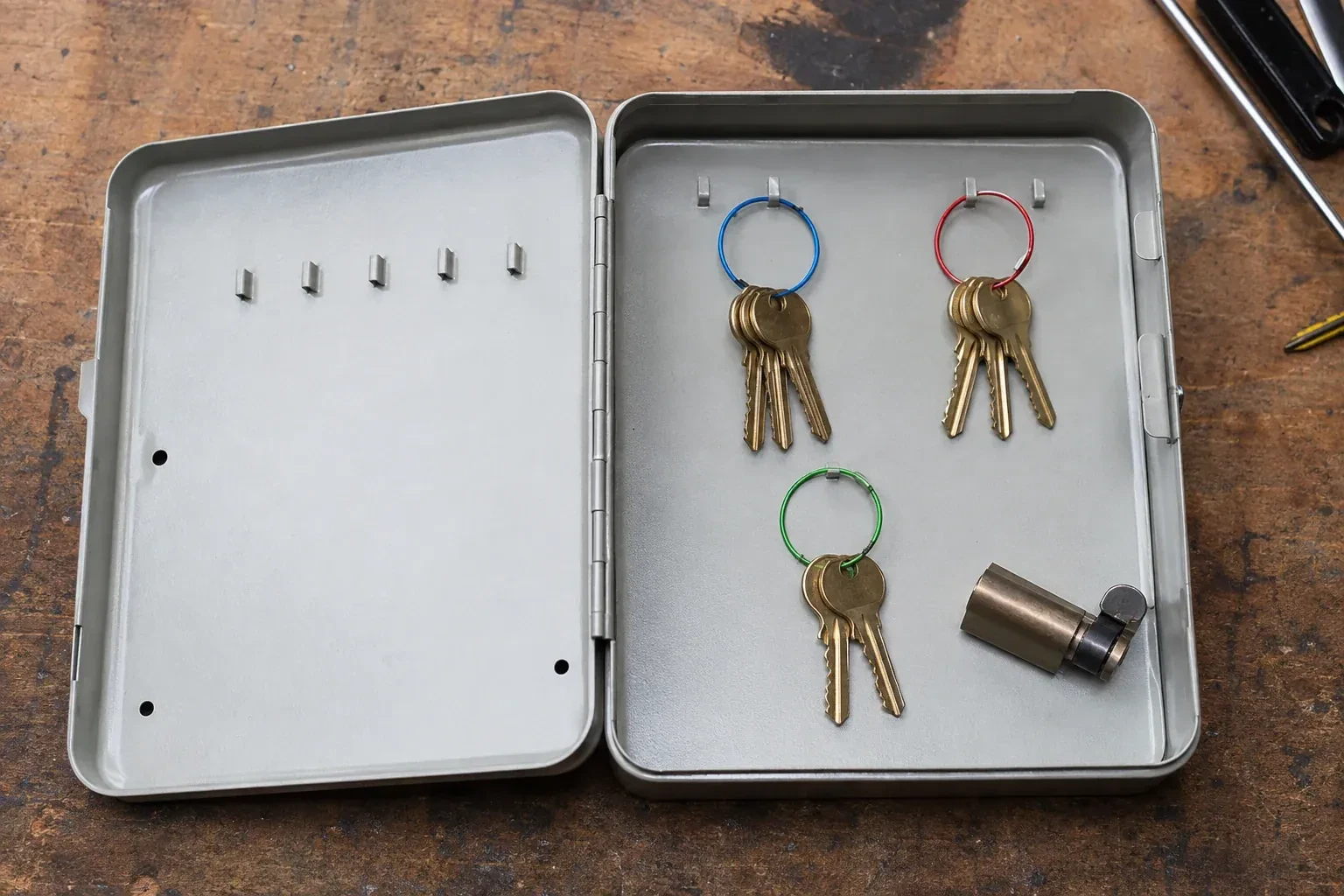
Three groups of keys on colored rings in an open metal key cabinet. — Master Key System Design, Blair

Commercial · Blair

Master Key System Design

A self-storage operator wants the office, the tenant gate and the equipment shed on three different levels of access for staff, but every lock on the property currently answers to the same handful of interchangeable keys handed out over the years.

In plain words

In a building shared by several tenants, departments or contractors, master key system design draws a clear line between who needs a broad master and who needs a single change key for their own door. Cleaners, maintenance staff, department heads and the owner typically sit at different levels, and the hierarchy is built to reflect that rather than to make life easier for whoever is issuing keys that week. The chart that results shows every level at a glance, which makes it far simpler to answer a basic question: who can currently get into this room.

Sound familiar?Blair

The call
The new wing was built with its own brand of cylinder, so the two-year-old keys from the original building do not open a single door in the addition. Staff are now carrying two separate key rings just to move around one workplace.

NextHow the visit goes

Master Key System Design · Blair

How the visit goes

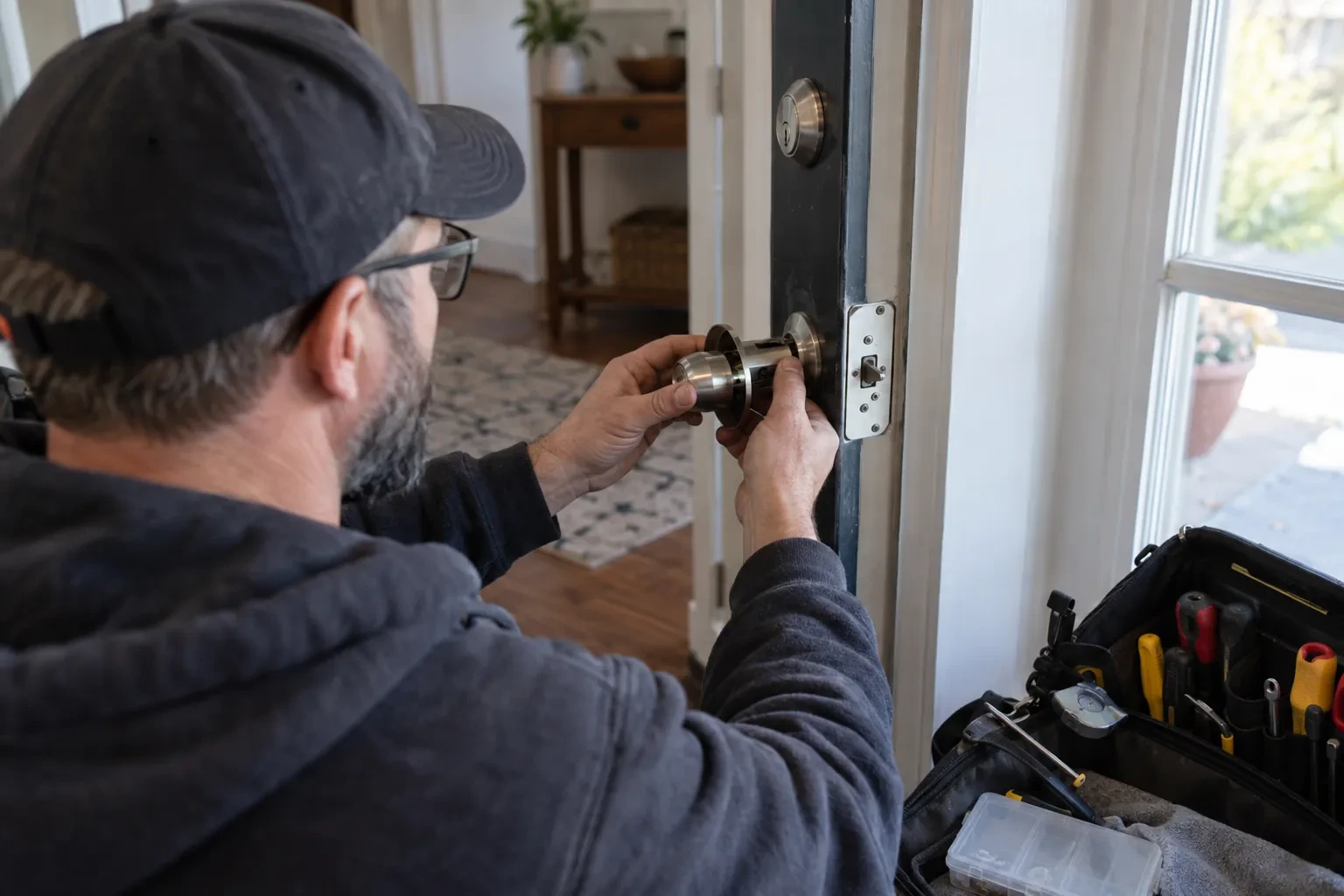
Technician fitting a steel door knob into a door beside a deadbolt, with an open tool bag of screwdrivers nearby. — Blair
  1. Scene 1

    Duplication and how tightly it needs to be controlled

    Some businesses are comfortable with standard key blanks that any hardware counter can cut; others, especially where records, cash or controlled supplies sit behind a door, want a restricted or patented keyway that limits duplication to a record the owner controls. This is decided door by door rather than for the whole property at once, since a stockroom and a records room rarely carry the same risk. The answer shapes both the hardware chosen and how future copies of any given key will be requested and tracked going forward.

  2. Scene 2

    Choosing a platform with room in it

    The keying platform and keyway are chosen to hold every level the design calls for, plus a margin for doors that are likely to join later. Each cylinder is then pinned chamber by chamber to the planned bittings, with bottom and master pins stacked together to create the shear lines every level needs to turn that one cylinder. Getting this stacking right is what prevents a common mistake: a change key that, through an overlooked shared pin, quietly opens more than the door or keyed-alike group it was meant for.

  3. Scene 3

    A plan for the next new hire or department

    Adding someone to the system afterward is usually a matter of consulting the existing chart and issuing them a copy of the authorized key their role already calls for, rather than opening the whole hierarchy back up. A genuinely new combination is only usable on doors whose cylinders are pinned to accept it, so the same chart shows whether that means picking an existing bitting or scheduling a repin, keeping the decision informed rather than improvised.

In the van

  • Cylinder decoders
  • Change and master keys
  • Master pin kits
  • Key marking tools
  • Locking chart storage cabinet

What shapes the quotePreston Locksmith Co.

Working around an occupied, operating property
Rekeying doors in a planned sequence so a business keeps operating throughout, rather than all at once, takes coordination with the owner's schedule. Properties that need this staged approach, with interim arrangements for doors mid-conversion, add planning time beyond a straightforward, all-at-once installation.
Collecting and retiring old keys
Gathering up old keys that are being replaced, confirming they no longer operate any cylinder, and retiring them from circulation is a small additional step some businesses want included, separate from the core design and cutting work.
Compatibility of existing hardware
Cylinders that can join the new hierarchy without modification keep the project smaller. Hardware that is mismatched, worn or built on an incompatible keyway needs replacing to fit cleanly into the plan, and that replacement hardware is a separate line from the design and pinning work.
FeesSame any hour

Have it ready

Before you call · 0 / 3

(226) 807-5217

Good questions about locks

What is the difference between a master key and a sub-master?

A sub-master sits below the top level and opens a defined group, such as one department or one floor, without opening doors outside that group. The top-level master sits above every sub-master and opens everything in the system. Most properties need only one or two sub-master levels; adding more than the business genuinely uses just makes the chart harder to manage without adding real convenience.

What should I have ready before the assessment visit?

A rough list of who currently has access to which doors, any existing keys or cylinders you can point to, and a sense of upcoming changes such as new hires, a department split, or a unit due to open. None of this needs to be exact; the assessment is partly built around confirming or correcting whatever the business already assumes about its own access.

Can my existing locks be used, or do I need all new hardware?

Many existing cylinders can join a new hierarchy as they are, once their keyway and condition are confirmed compatible. Others, particularly older or mismatched hardware, are replaced so the whole system pins cleanly without cross-keying. The assessment identifies which doors fall into each group before any work begins, so the plan reflects what is actually on the property rather than assuming everything needs to change.

Blairinformation

WaterlooOntario

Master Key System Design · Cambridge, Hespeler, Preston

Town
Blair, Waterloo
In business
26 years
Hours
Open 24/7
Nights, weekends and holidays, same fees
Visits
On-site assessment preferred. Request a visit or call.

2021 census: what it means at the door

Every square is one home in a hundred.

  • 48 in 100 homes · mixed ages
  • About 48% of homes in Cambridge were built in 1980 or earlier, according to the 2021 Census.In an area where homes span several eras, one street may have original mortise locks and the next builder-grade cylinders. A locksmith working here carries parts for both, so whichever door he meets, the job finishes in one visit.
  • Single-detached houses make up about 57% of homes in Cambridge (2021 Census).A mix of detached and attached housing means a mix of key habits: spare keys under pots at houses, fob-and-key combinations in buildings. A locksmith can improve both, with a proper key safe or keypad here and a tidy suite cylinder there.

Source: Statistics Canada, Census Profile

Open Blair in Google Maps

On-site assessment

Request a visit.

A self-storage operator wants the office, the tenant gate and the equipment shed on three different levels of access for staff, but every lock on the property currently answers to the same handful of…

(226) 807-5217, open 24/7.