Skip to content
PrestonLocksmith Co.Open 24/7 (226) 807-5217
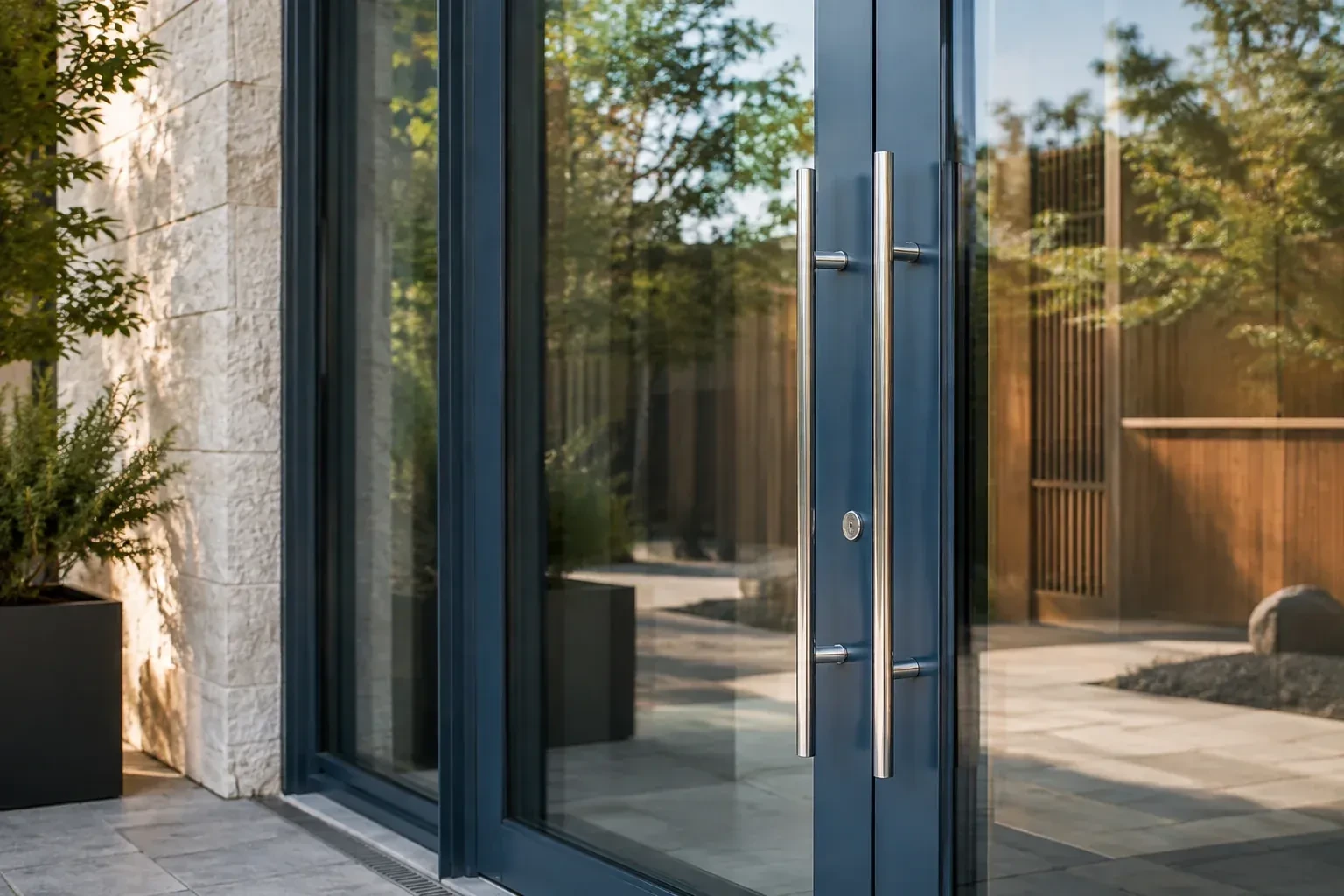
Dark-framed glass entrance doors with long silver-colored vertical pull handles and a round keyhole. — Business Lockout Service, Blair

Lockouts · Blair

Business Lockout Service

It is ten to nine, three staff are on the sidewalk with their coffees, and the key that has opened the glass front door for six years will not turn. The cylinder feels gritty, the door is locked, and the first customer is already parking.

In plain words

On a commercial door the lock is rarely alone. A door contact feeds the alarm panel, a card reader drives an electric strike or a magnetic lock, and a monitoring company is watching for an opening outside business hours. A business lockout therefore starts with a conversation about those systems: who can disarm the alarm, whether the monitoring station should be told to expect an entry, and whether the electrified hardware has a mechanical override. Handling that first means the door opens without a patrol being dispatched, the access system is left working as designed, and the reader can be reset once someone is inside.

Sound familiar?Blair

The call
The heavy glass door has been scraping the threshold for weeks. This morning the key turns, you can hear the bolt trying to move, but it is jammed hard in the strike and the door stays shut no matter how the handle is pulled.
NextHow the visit goes

Business Lockout Service · Blair

How the visit goes

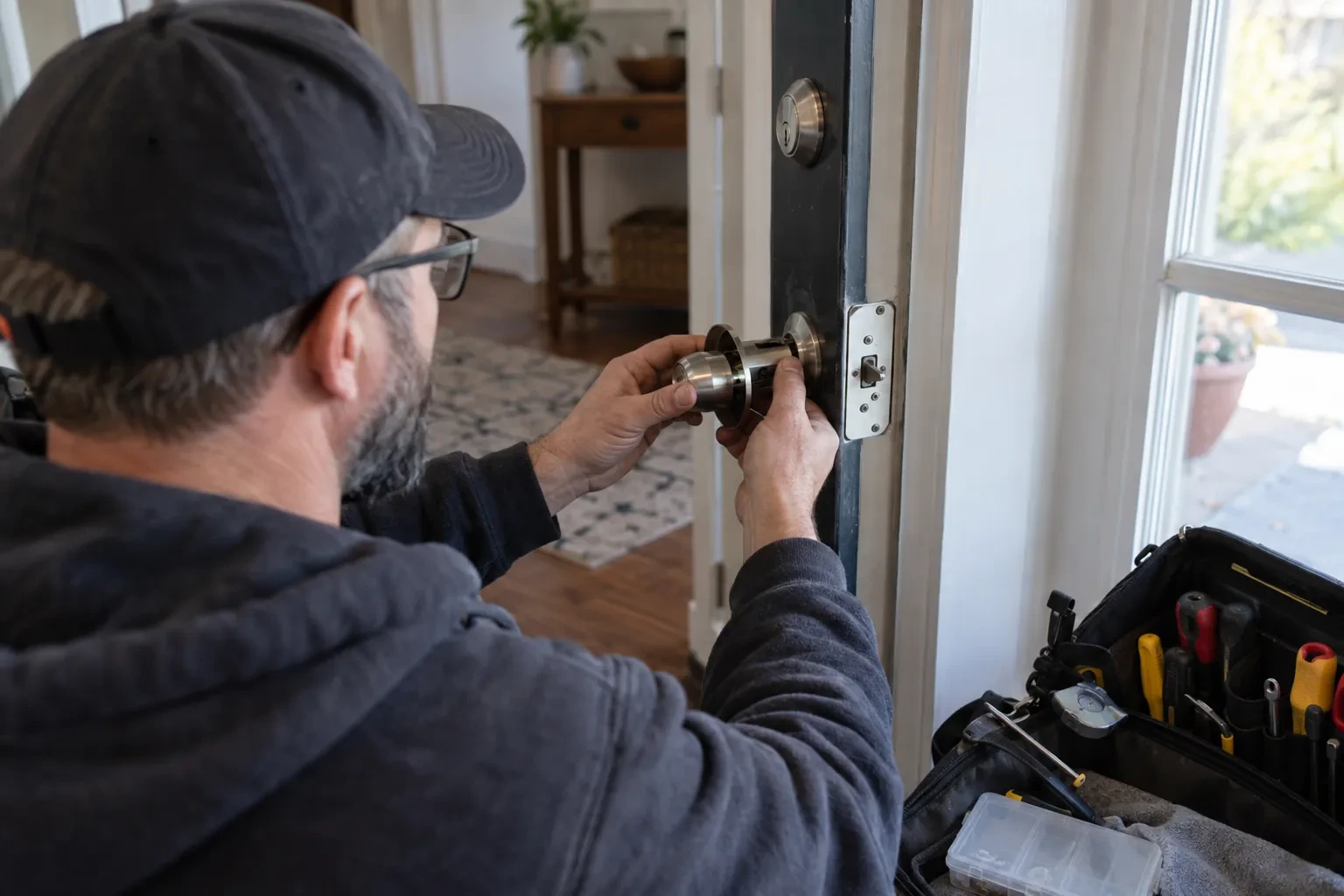
Technician fitting a steel door knob into a door beside a deadbolt, with an open tool bag of screwdrivers nearby. — Blair
  1. Scene 1

    Every other opening on the premises

    The front door is rarely the only lock a business relies on. The locksmith asks about the rear service door, the side door to the compactor, a roll-up shutter and its padlock, the gate on the compound, and interior doors that matter such as the cash office, the stockroom, the server closet and the staff washroom. Some of these may be on the same key as the front door and others on their own. Knowing the map before starting means the right cylinders are rekeyed together afterwards, a padlock is not forgotten, and a second door that could have been opened more gently is not overlooked while everyone stares at the first.

  2. Scene 2

    Making an unreturned key useless

    When a key is lost or unreturned, the second half of the visit is rekeying. Mortise and rim cylinders are removed, the plug slid out with a follower, and the bottom pins changed to a new combination so a fresh key operates them and the old one turns nothing. Where the building uses interchangeable cores, the core is swapped for one on a new combination. Cylinders that shared the old key are brought onto the new one, and if the door sits within a master key system the change is planned with the property manager so building keys keep working. New keys are cut, tested in every door and recorded against named holders.

  3. Scene 3

    Exit doors that still let everyone out

    Whatever was replaced, a door on the way out of the building still opens from inside with a single motion and no key while people are in it. That standard is why a storefront gets a thumb-turn or paddle inside, a rear door keeps its push bar, and a double-cylinder deadbolt does not go on an exit route. The locksmith checks each door for this before leaving and points out any older hardware, such as a chain or a keyed-inside bolt on a back door, that the business may want to bring into line.

In the van

  • Exit device trim cylinders and dogging keys
  • Strikes, pivot shims and closer adjustment tools
  • Interchangeable cores pinned to system
  • Broken key extractors
  • Storefront deadlatch and hookbolt bypass tools

What shapes the quotePreston Locksmith Co.

Master key system changes
Where the door belongs to a building-wide master key system, changing it means planning with the property manager and pinning cylinders so both your key and the building key still work, which is more careful work than a single rekey.
Standard or high-security cylinder
Restricted keyways, security pins and patented cylinders take longer to open and cost more to replace, and their keys are cut from system records rather than copied at a counter.
Rekeying or swapping cores afterwards
Making a lost or unreturned key useless is separate work, priced per cylinder or per core, and the count of doors sharing that key decides how much of it there is.

FeesSame any hour

Have it ready

Before you call · 0 / 3

(226) 807-5217

Good questions about locks

Will we get something in writing afterwards?

Yes. The visit closes with a written account of which door was opened and how, the condition the hardware was in, anything replaced, the number of keys cut and who received them. Landlords ask for it when locks on a unit change, insurers after a loss, and franchise head offices as a matter of course. Keep it with the lease; it also tells the next locksmith exactly what is on your doors.

What is an interchangeable core, and how do I know if we have one?

An interchangeable core is a small, self-contained cylinder that slides out of the lock with a special control key and drops back in on a new combination. Look at the keyway: a figure-eight shaped face on a lever or mortise housing is the usual sign. Buildings choose them because a lost key or a staff change is handled by swapping the core rather than taking the lock apart, and a locksmith can carry cores pinned to your system.

Can we put a keyed deadbolt on both sides of the back door for extra security?

On a door people leave through while the building is occupied, the door needs to open from inside with one motion and no key, so a key-both-sides bolt is not the right tool there. Security is added instead with a heavy-duty exit device and a reinforced strike, a keyed trim outside, an alarm contact, or a door position sensor on the access system, all of which keep the way out clear.

Blairinformation

WaterlooOntario

Business Lockout Service · Cambridge, Hespeler, Preston

Town
Blair, Waterloo
In business
26 years
Hours
Open 24/7
Nights, weekends and holidays, same fees
Visits
On-site assessment preferred. Request a visit or call.

2021 census: what it means at the door

Every square is one home in a hundred.

  • 48 in 100 homes · mixed ages
  • About 48% of homes in Cambridge were built in 1980 or earlier, according to the 2021 Census.In an area where homes span several eras, one street may have original mortise locks and the next builder-grade cylinders. A locksmith working here carries parts for both, so whichever door he meets, the job finishes in one visit.
  • Single-detached houses make up about 57% of homes in Cambridge (2021 Census).A mix of detached and attached housing means a mix of key habits: spare keys under pots at houses, fob-and-key combinations in buildings. A locksmith can improve both, with a proper key safe or keypad here and a tidy suite cylinder there.

Source: Statistics Canada, Census Profile

Open Blair in Google Maps

On-site assessment

Request a visit.

It is ten to nine, three staff are on the sidewalk with their coffees, and the key that has opened the glass front door for six years will not turn.

(226) 807-5217, open 24/7.